


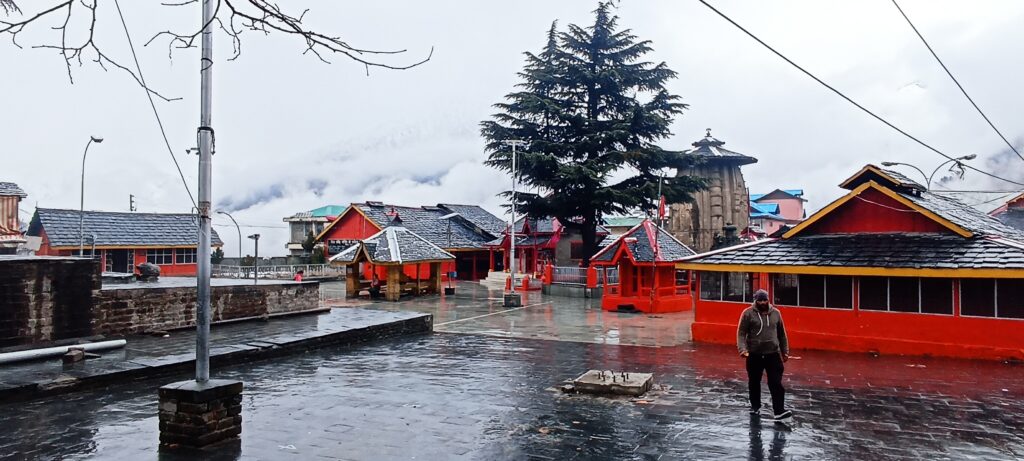

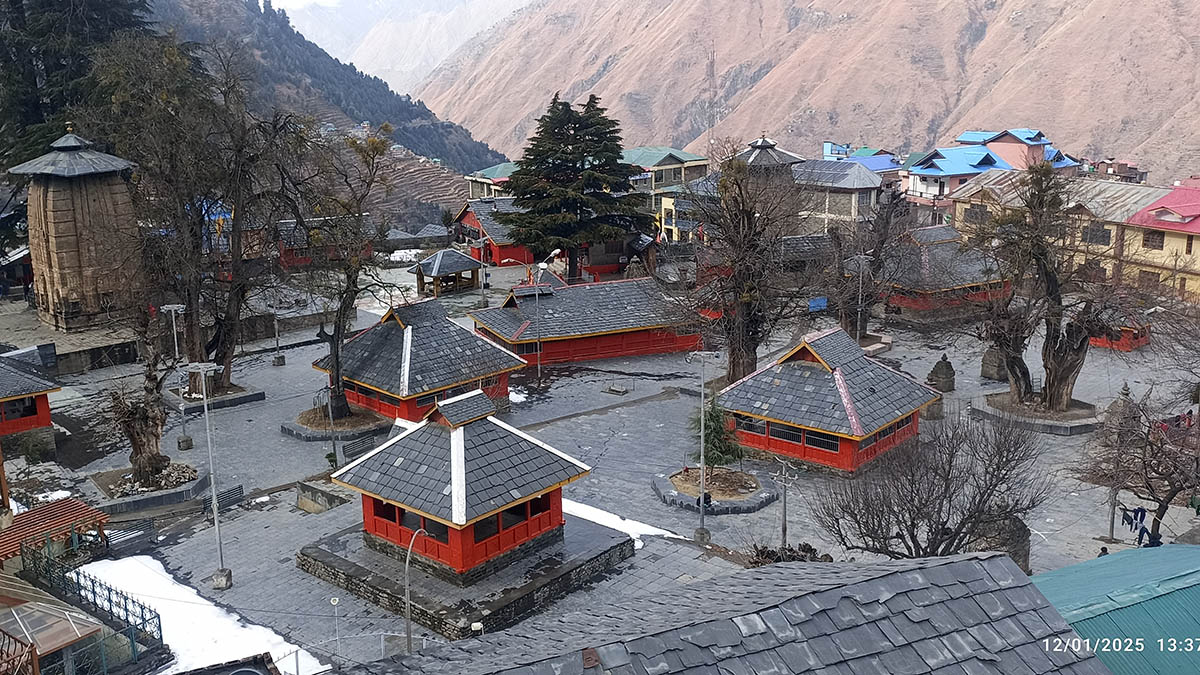
Nestled amid the pristine mountains of Himachal Pradesh, the Chaurasi Temple Complex in Bharmour stands as a living testament to India’s ancient spiritual and architectural brilliance. Located in the heart of Bharmour town, this group of 84 temples, built around 1400 years ago, forms one of the most significant religious and cultural landmarks of the region. The term Chaurasi translates to eighty-four in Hindi, signifying the 84 shrines that occupy the sacred periphery of this complex. At the center of this celestial cluster lies the Manimahesh Temple, dedicated to Lord Shiva — a divine embodiment that anchors the spiritual life of Bharmour’s people.
The Spiritual Significance and Origins of the Chaurasi Temples
Bharmour, formerly known as Brahampura, was once the ancient capital of Chamba. The Chaurasi Temple Complex is believed to have been established around the 7th century CE, though several structures within have undergone repairs and renovations over time. According to local traditions, the temples were constructed under the reign of Raja Maru Varman, who ruled the region during the early medieval period.
Two fascinating legends surround the origin of this complex. The first speaks of 84 Siddhas (enlightened sages) who traveled from Kurukshetra on a pilgrimage to Manimahesh Kailash, the sacred abode of Lord Shiva. Enchanted by the tranquil beauty of Bharmour, they decided to meditate there. Their divine presence sanctified the land, and over time, 84 shrines were erected, each symbolizing the energy of these Siddhas who transformed themselves into Shivlingas — the eternal forms of Lord Shiva.
The second legend connects the temples with Raja Sahil Varman, the ruler of ancient Brahampura. It is said that soon after his rise to power, 84 yogis visited his kingdom. Deeply impressed by his hospitality, the yogis blessed the king with ten sons and one daughter, Champavati. The king, in gratitude, built the Chaurasi Temple Complex to honor these yogis. Later, his beloved daughter’s name was immortalized when the new capital “Chamba” was founded in her memory. Thus, the Chaurasi Temples serve as both a religious epicenter and a symbol of royal devotion.
Architectural Grandeur: A Blend of Wood, Stone, and Faith
The Chaurasi Temples represent a harmonious blend of Himachali, Nagara, and Shikhara-style architecture. The temples are constructed primarily in stone, with intricate carvings and motifs depicting gods, goddesses, and mythological scenes. The spacious central courtyard, surrounded by small and large temples, creates a serene environment ideal for meditation and prayer. Despite being over a millennium old, many of these structures retain their original architectural details, reflecting the exceptional craftsmanship of early Himalayan artisans.

Prominent Temples Within the Chaurasi Complex
1. Lakshana Devi Temple (Lakhna Devi / Mahishasuramardini Temple)
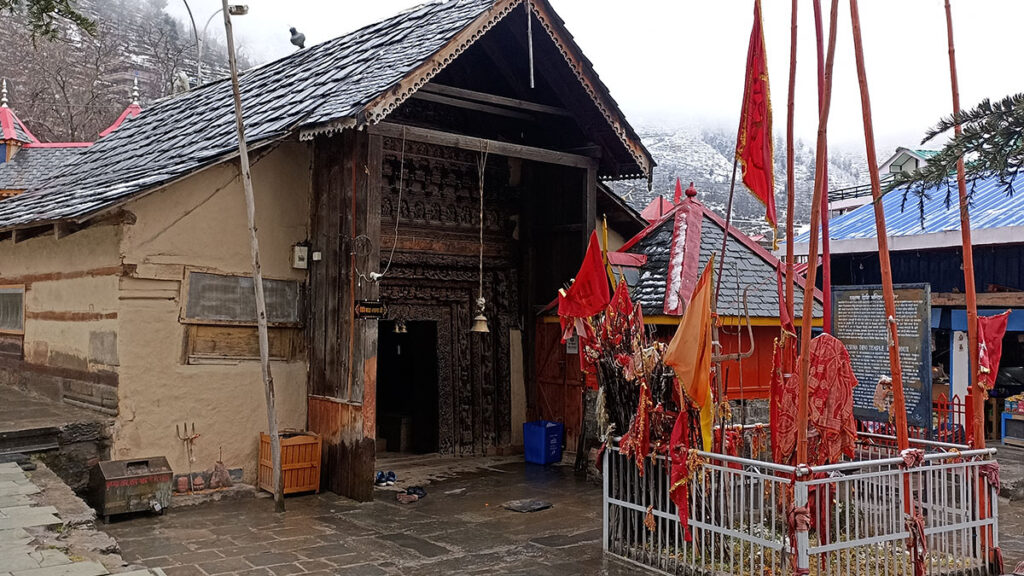
The Lakshana Devi Temple is regarded as the oldest temple in the Chaurasi complex, dating back to around 680 AD. Built by Raja Maru Varman, it exhibits a remarkable wooden façade with intricate carvings that narrate scenes from Hindu mythology. Inside, the goddess Durga is worshipped in her fierce form as Mahishasuramardini, the slayer of the demon Mahishasura. Despite its age, the temple’s wooden structure has endured centuries, symbolizing strength and divine protection.
2. Manimahesh (Shiva) Temple
At the heart of the complex stands the Manimahesh Temple, dedicated to Lord Shiva in the form of a grand Shivlinga. The temple’s shikhara-style spire dominates the skyline of Bharmour. Pilgrims from across India visit this shrine before embarking on the Manimahesh Yatra, the holy pilgrimage to Manimahesh Lake, located at an altitude of 13,000 feet. The temple represents both the spiritual and geographical center of Bharmour’s devotion.
3. Narsingh (Narasimha) Temple
Dedicated to Lord Vishnu’s fourth incarnation — Narasimha, this temple houses a beautifully cast bronze idol depicting the deity in his man-lion form. The image, both majestic and awe-inspiring, highlights the region’s ancient metallurgical skill. The temple stands as a testimony to the Vaishnav influence that coexisted harmoniously with Shaivism in early Himachali culture.
4. Nandi Bull Temple
Facing the Manimahesh Temple is a life-sized metal statue of Nandi, Lord Shiva’s divine bull. Unlike most Nandi idols found reclining, this one stands on all fours, a rare representation described in the Vishnudharmottara Purana. Locals call this sacred bull Nandigan, symbolizing stability and dharma.
5. Dharmeshvar Mahadev (Dharamraj) Temple
Located at the northern corner of the complex, the Dharamraj Temple represents the court of the Lord of Justice. Locals believe that after death, every soul passes through this temple to seek permission from Dharamraj before entering the realm of Shiva. The temple is affectionately referred to as “Dhai-podi”, meaning two and a half steps, signifying the soul’s spiritual journey toward liberation.
6. Ganesh Temple
Situated near the entrance of the complex, the Ganesh Temple was built by the rulers of the Varman dynasty in the 7th century. The temple originally housed a wooden idol, but it was destroyed during the Kira invasion, and a bronze statue of Ganesha, now missing its legs, replaced it. Despite its mutilation, the deity remains a revered guardian of the Chaurasi precinct.
7. Swami Kartikeya (Kelang) Temple
Dedicated to Lord Kartikeya, the god of war, this temple stands to the right of the Lakshana Devi shrine. It enshrines both a stone symbol of Kelang and a six-inch metal idol holding a staff and ring. A modern marble statue has been added recently, illustrating the continuing devotion of the locals. Worship of Kartik Swami (Kelang) remains widespread across Bharmour and its surrounding villages.


Myths, Legends, and Living Traditions
The mythic origins of the Chaurasi Temples intertwine with that of Bharmani Devi, the guardian goddess of Bharmour. According to local belief, when Lord Shiva and the 84 Siddhas sought refuge in Bharmour, Bharmani Devi grew concerned that her importance would diminish. To honor her, Shiva decreed that every pilgrim visiting Manimahesh Lake must first take a dip in the Bharmani Kund, ensuring that her blessings remain eternal. Even today, devotees follow this sacred ritual, symbolizing harmony between divine powers.
Eternal Echoes of Devotion
The Chaurasi Temple Complex is not just a collection of shrines; it is a living chronicle of devotion, mythology, and ancient Himalayan artistry. With its timeless sculptures, sacred legends, and serene environment, Bharmour continues to echo the chants of sages who once meditated here. Every stone, every carving, and every ritual breathes the spirit of a bygone era — one that still guides the spiritual rhythm of the Chamba Valley.